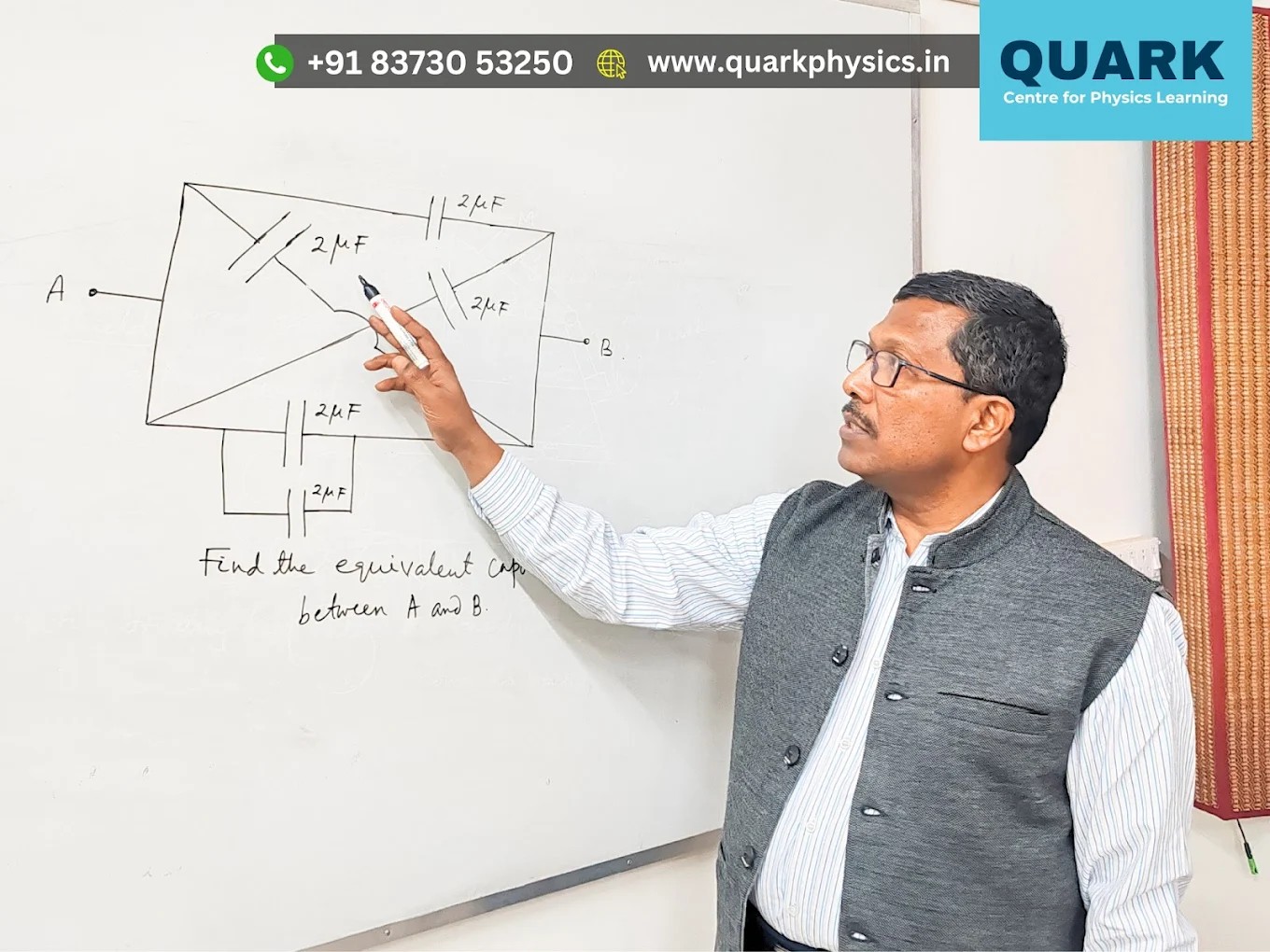
If you've typed "physics tuition in Kolkata" into Google at 11 pm while your Class 11 daughter is stuck on rotational motion, you already know the problem isn't a shortage of options — it's a shortage of good ones. Salt Lake alone has a coaching centre on almost every block. Newtown, Lake Town, Dum Dum, Kestopur, Baguihati — every neighbourhood has its own cluster of "IIT-JEE Physics Expert" hoardings.
So how do you actually tell the difference between a tutor who will get your child through the syllabus and one who will genuinely build their physics foundation for boards, JEE, and NEET?
That's exactly what this guide is for. We'll walk through what's changed in Kolkata's exam landscape for 2026, what actually separates good physics coaching from average coaching, how to evaluate a tuition centre before you enrol, and what to expect at every stage from Class 9 through JEE/NEET drop years. This isn't a sales pitch dressed up as an article — it's the same framework we'd want a parent to use before choosing any coaching centre, including ours.
Physics is the subject most Kolkata students describe as "the one that makes or breaks my percentile." Unlike chemistry, which rewards memorisation, or biology, which rewards recall, physics rewards understanding under pressure — the ability to apply a concept to a problem you've never seen before, in a fixed number of seconds, with negative marking hanging over every guess.
That's precisely why school classroom teaching, however competent, often isn't enough on its own. A school physics teacher is managing 40+ students across a fixed syllabus timeline. A dedicated physics tutor or coaching centre is managing your child's specific gaps, their specific exam (CBSE, ISC, or State Board), and — for many Kolkata students — their specific JEE or NEET target as well.
This is also why demand for physics tuition in Salt Lake, Newtown, and the wider Kolkata belt has grown steadily rather than dipped, even as more free content becomes available online. Video lectures can explain a concept; they can't watch your child solve a problem on the board and immediately spot why they're subtracting instead of adding vectors.
If you're choosing physics tuition in 2026, you need a tutor or centre that's actually tracking these changes — not one still teaching to a 2022 exam pattern.
Starting from the 2025–26 academic year, CBSE introduced a two-examination system for Class 10, with a mandatory Phase 1 exam held in February–March and an optional Phase 2 improvement exam in May–June, where the better of the two scores is retained for the final result. Question papers now carry a much heavier competency-based and case-study weightage, meaning rote-memorised formulae matter less than the ability to apply concepts to unfamiliar situations.
For Class 10 physics specifically, this shift rewards students who genuinely understand why a concept works, not just the formula for it — which is exactly the kind of teaching a good tuition centre should be reinforcing from Class 9 onward, not just before the exam.
JEE Main's Physics section now carries 25 compulsory questions for 100 marks — 20 MCQs and 5 numerical-value questions, and unlike earlier years, every numerical question is compulsory and carries negative marking, with no optional "attempt any 5 of 10" cushion left. That single change has raised the accuracy bar significantly: guessing on numerical questions is now a real risk to your score, not a free roll of the dice.
For students preparing for JEE Physics coaching in Kolkata, this means the old strategy of "skip the numericals you're unsure of" no longer works — coaching now has to build genuine calculation confidence, not just conceptual recognition.
Ready to improve your Physics scores? Join Quark Centre for Physics Learning In Kolkata today—call 8373053250 to book your FREE demo class and start learning with expert guidance!
NEET Physics continues to be the section where the widest score gaps appear between toppers and average scorers, largely because NEET aspirants often come from a biology-first mindset and treat physics as an afterthought. Coaching that treats NEET physics as "JEE physics but easier" typically under-serves these students — NEET rewards fast, accurate conceptual recall far more than deep multi-step problem solving.
Many Kolkata families still follow the West Bengal State Board or ISC curriculum for Classes 11–12, and it's worth remembering that these boards have their own distinct question patterns, internal assessment weightages, and practical exam structures — a physics tutor who only knows the CBSE pattern can leave real gaps for these students.
You don't need a physics degree to evaluate a physics teacher — you just need to know what to watch for.
Concept-first, formula-second. A good teacher derives a formula on the board before using it, so students understand where it comes from and when it breaks down. A weak teacher hands out formula sheets and moves straight to plug-and-chug practice.
Real-world grounding. Concepts like circular motion, thermodynamics, or electromagnetism stick far better when tied to something tangible — a satellite's orbit, a pressure cooker, an MRI machine — rather than taught as abstract equations in isolation.
Error-pattern tracking. Strong tutors don't just mark answers right or wrong; they track why a student keeps making the same type of mistake (sign errors, unit conversion, misreading the question) and address the pattern, not just the individual question.
Regular, honest feedback. Parents should be told clearly where their child stands — not reassured with vague "doing well" updates every month, only to be surprised by a poor report card.
Manageable batch sizes. A teacher spread across 60 students in one batch simply cannot give the individual attention a Class 11 or 12 physics student needs, especially heading into JEE or NEET.
Kolkata's physics tuition landscape varies quite a bit by neighbourhood, and knowing the local context helps you set the right expectations.
Salt Lake: One of the most concentrated hubs for physics coaching in Kolkata, with a mix of individual tutors and established institutes. Its central location makes it a natural choice for students from Salt Lake itself as well as nearby Kestopur and Lake Town.
Newtown: A rapidly growing residential zone with an increasing number of CBSE and ISC schools, which has driven strong demand for structured physics classes, particularly for Class 11–12 JEE/NEET aspirants.
Dum Dum: A well-established locality with a long tradition of tuition culture, though families here often travel to Salt Lake for more specialised JEE/NEET-focused coaching.
Lake Town: Centrally positioned with good connectivity to Salt Lake and Dum Dum, making it convenient for students to access Salt Lake-based coaching centres without a long commute.
Baguihati & Kestopur: Growing student populations in these areas increasingly search for "physics tuition near me," and many now opt for hybrid online-offline models to avoid long commutes during exam season.
This is foundation-building territory — motion, force, gravitation, work and energy, sound. The single biggest mistake at this stage is treating Class 9 as "not important yet." Weak foundations here compound directly into Class 11 struggles with mechanics.
With CBSE's new two-exam scheme now live, Class 10 physics tuition needs to build both conceptual clarity (for the competency-based questions) and calm exam temperament (since students now get a real second chance, but only if Phase 1 preparation is genuinely strong). Topics like light, electricity, and magnetic effects of current form the bulk of the marks here.
This is where physics gets genuinely harder — mechanics, thermodynamics, oscillations and waves — and where the gap between JEE/NEET-track students and board-only students starts to show. Class 11 physics tuition should already be introducing JEE/NEET-style problem-solving, even for students who haven't fully decided on their competitive exam plans yet.
Electrostatics, current electricity, electromagnetic induction, optics, and modern physics dominate both board exams and JEE/NEET. Class 12 physics tuition needs tight time management — balancing board revision with entrance exam mock tests, often in the same week.
Students repeating a year for JEE or NEET need a very different teaching approach — less re-explanation of basics, more rigorous timed practice, error analysis, and mental resilience coaching, since motivation dips are common in this phase.
Board exam preparation is not just "easier JEE prep." Each board rewards different things:
Checklist for board exam readiness:
With JEE Main 2026 now demanding 25 compulsory physics questions and full negative marking on every numerical, accuracy has to be trained as deliberately as speed.
A realistic JEE Physics roadmap:
Common JEE Physics mistakes:
NEET Physics has a reputation for being the section that pulls down otherwise strong biology-and-chemistry scorers, mainly because NEET rewards speed and precision on moderately difficult concepts rather than the deep, multi-step problem-solving JEE demands.
NEET Physics preparation priorities:
Both formats have real advantages, and the right choice often depends on your child's learning style and your locality.
Offline physics classes work well for students who need structured, distraction-free environments and benefit from in-person doubt-solving and peer learning — especially valuable for Salt Lake-based students who can access a centre easily.
Online physics tuition in Kolkata has become a genuinely strong option for students in Newtown, Baguihati, Kestopur, and beyond who want institute-quality teaching without a long commute eating into study time, particularly during intense JEE/NEET prep phases.
A hybrid model — where a student attends in-person classes most weeks but can switch to online sessions during exams, illness, or travel — is increasingly what serious coaching centres in Kolkata now offer, and it's worth specifically asking about during your search.
For parents:
For students:
Use this checklist during your first visit or demo class:
If a centre is reluctant to offer a demo class, that alone tells you something.
At Quark Centre for Physics Learning, based in Salt Lake, Kolkata, we built our teaching approach around the exact gaps this guide has walked through:
1. What is the best physics tuition in Kolkata for Class 11 and 12 students?
The best physics tuition for Classes 11–12 combines strong concept-based teaching with structured board and JEE/NEET preparation, small batch sizes, and regular, honest feedback — rather than large, impersonal lecture halls.
2. How much does physics tuition cost in Kolkata?
Fees vary widely depending on batch size, faculty experience, and whether the coaching includes JEE/NEET preparation alongside board exam support; it's best to compare fee structures directly with shortlisted centres after attending a demo class.
3. Is online physics tuition as effective as offline classes?
For many students, especially those juggling long commutes from areas like Newtown or Kestopur, online physics tuition can be just as effective as offline classes, provided there's live interaction, regular testing, and genuine doubt-clearing support.
4. What has changed in CBSE Class 10 board exams for 2026?
CBSE now conducts Class 10 board exams in two phases each year, with a mandatory Phase 1 in February–March and an optional Phase 2 improvement exam in May–June, and the higher of the two scores is retained.
5. Has the JEE Main 2026 physics exam pattern changed?
JEE Main Physics 2026 has 25 questions for 100 marks — 20 MCQs and 5 numerical-value questions — and all numerical questions are now compulsory with negative marking, unlike the earlier optional format.
6. How is NEET physics different from JEE physics preparation?
NEET physics rewards fast, accurate recall of NCERT-based concepts, while JEE physics demands deeper, multi-step problem-solving, so an effective NEET-focused approach is not simply a "lighter" version of JEE preparation.
7. When should my child start physics tuition — Class 9 or Class 11?
Starting in Class 9 helps build the conceptual foundation that Class 11–12 physics and competitive exams heavily depend on, though many students also join successfully from Class 11 if their fundamentals are solid.
8. What should I look for during a physics tuition demo class?
Watch whether the teacher explains the reasoning behind concepts, how many students are in the actual batch, and whether doubts are addressed individually rather than glossed over.
9. Does Quark Centre offer both board exam and JEE/NEET physics coaching?
Yes, Quark Centre for Physics Learning offers structured tracks for CBSE, ISC, and State Board exam preparation alongside dedicated JEE and NEET physics coaching.
10. Is physics tuition available near Salt Lake and Newtown?
Yes, Quark Centre for Physics Learning is located in Salt Lake, Kolkata, with both offline classes for local students and online classes for students in Newtown, Lake Town, Dum Dum, Baguihati, and Kestopur.
11. How many students are typically in a physics coaching batch in Kolkata?
Batch sizes vary significantly across Kolkata's coaching centres; smaller, mentored batches generally allow far more individual attention than large lecture-style formats, which is worth confirming before enrolling.
12. What board exam changes affect Class 12 physics students in 2026?
Class 12 continues with a single annual board exam under CBSE, but question papers now place greater emphasis on competency-based and application-oriented questions rather than pure recall.
13. Can repeater or drop-year students join physics coaching mid-year?
Yes, most physics coaching centres, including Quark Centre, accommodate repeater and drop-year students with a preparation plan tailored to their existing strengths and gaps rather than starting from scratch.
14. How important is NCERT for physics preparation in boards, JEE, and NEET?
NCERT physics forms the core reference for CBSE board exams and NEET, and remains a strong foundational base even for JEE, where questions often go a step beyond NCERT in complexity.
15. How can I book a demo class at Quark Centre for Physics Learning?
You can book a free demo class at Quark Centre for Physics Learning by reaching out through our contact page or visiting our Salt Lake centre directly to experience our teaching approach firsthand.
Book a free demo class today and see the difference concept-based physics teaching makes.
Physics tuition in Kolkata has never mattered more than it does heading into 2026, with CBSE's new two-exam scheme for Class 10 and JEE Main's fully compulsory, negative-marked numerical questions raising the stakes on both accuracy and genuine understanding. The right coaching isn't the one with the biggest hoarding on your street — it's the one that teaches concepts from first principles, tracks your child's specific gaps, and stays current with every exam pattern change as it happens.
Whether you're in Salt Lake, Newtown, Lake Town, Dum Dum, Baguihati, or Kestopur, and whether your child is starting Class 9 physics or heading into a JEE or NEET drop year, the framework in this guide should help you ask the right questions before enrolling anywhere. And if you'd like to see concept-based, mentorship-driven physics teaching in action, we'd love to have you visit Quark Centre for Physics Learning in Salt Lake for a free demo class.
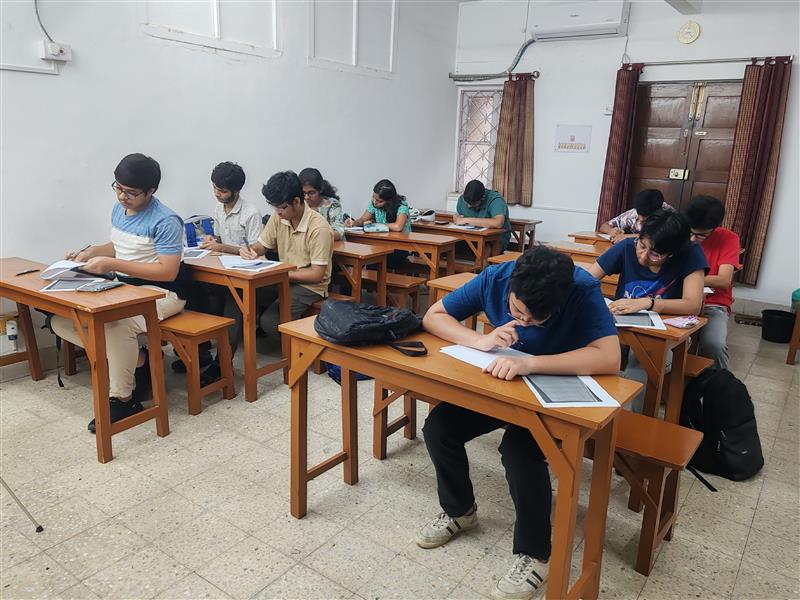
Best Physics Tuition in Kolkata: Why Quark Centre Is the Right Choice for JEE, NEET & Board Exam Success
14 May 2026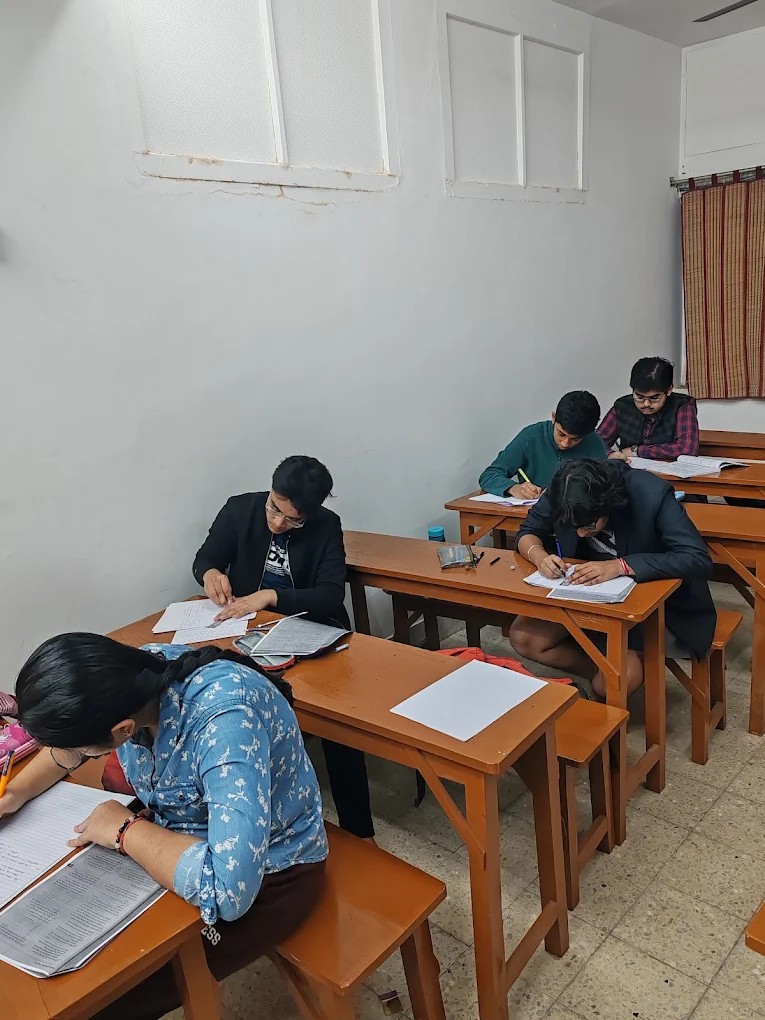
Online Classes for Physics JEE in Kolkata: How to Choose the Right Coaching in 2026
01 Jun 2026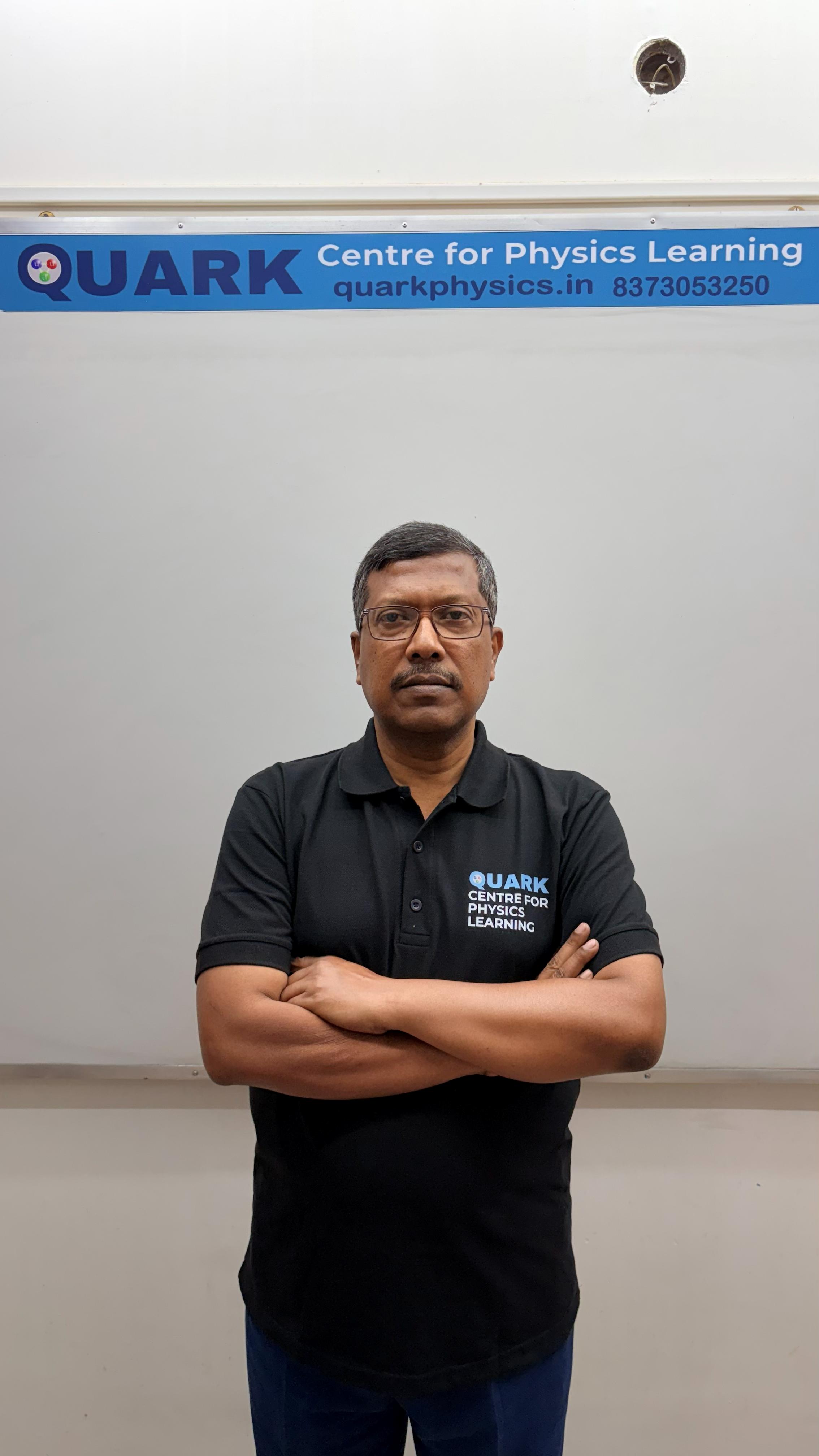
NEET Physics Roadmap for CBSE Class 11 Students in Kolkata
18 Aug 2026
WBJEE Physics Preparation : The Complete Guide for Students
10 Sep 2026
JEE vs NEET Physics: Should Your Child Prepare for Both at Once?
18 Sep 2026
NEET 2027 Physics Preparation Timeline: A Month-by-Month Plan for Kolkata Students Starting from Right Now
02 Oct 2026
Physics Home Tuition in Kolkata: Complete Guide for Class 9, 10, 11, 12, NEET and JEE Students 2026-27
08 Oct 2026
 quark740@gmail.com
 8373 053 250