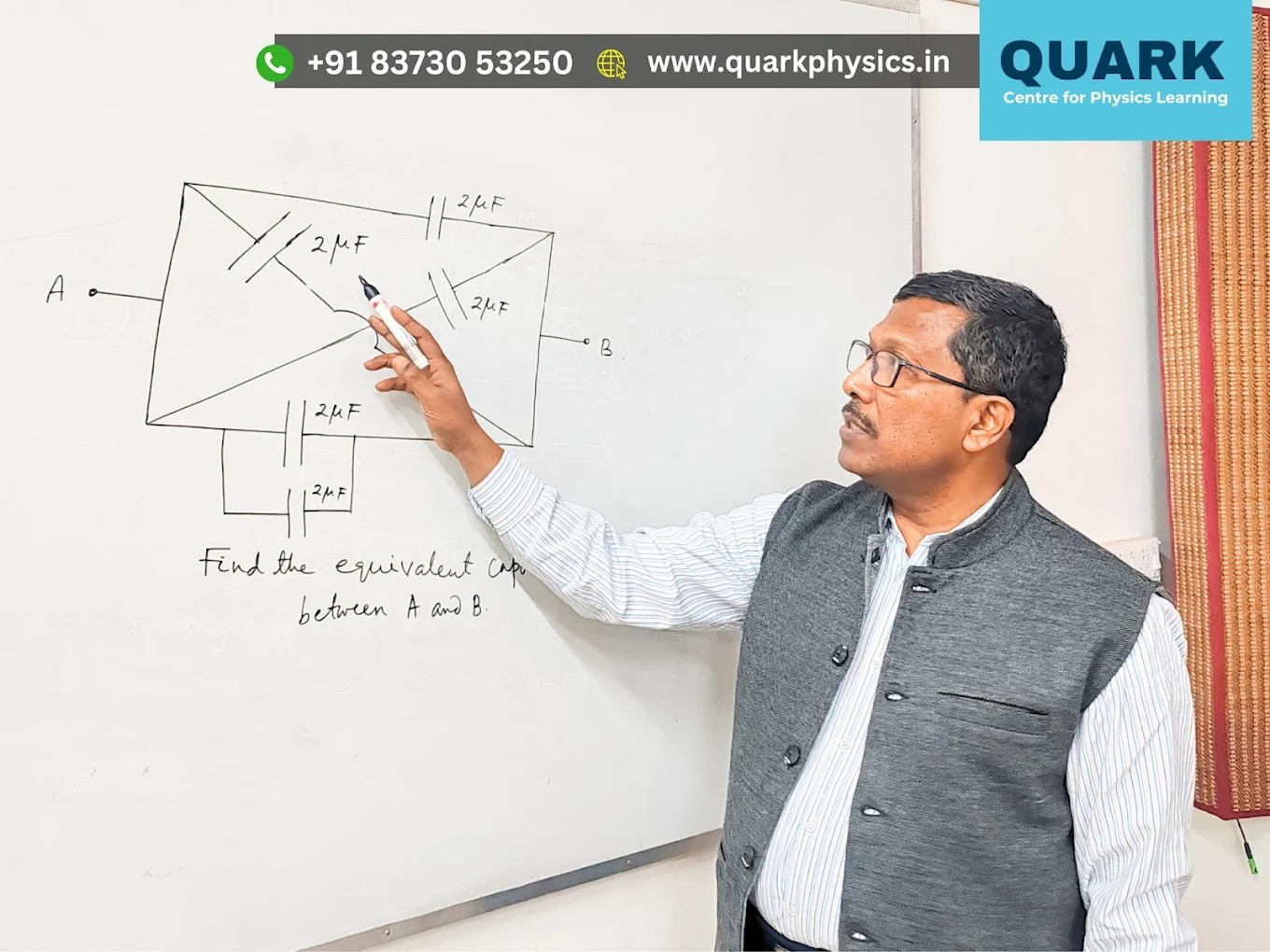
If you are a Class 12 student in Kolkata reading this in October 2026, here is the truth nobody around you is saying clearly: NEET 2027 is approximately seven months away.
Seven months sounds like enough time. It is — but only if you treat every single month with purpose. The students who will score 150 and above in NEET 2027 Physics are not necessarily the ones who started earliest. They are the ones who stopped drifting and started executing — with a clear chapter-by-chapter, month-by-month plan — exactly at this stage of Class 12.
There is one more context that every Kolkata NEET aspirant in 2026 must absorb before building a plan. NEET 2026 was cancelled after a paper leak and re-conducted on June 21, 2026. That disruption cost thousands of students months of momentum and psychological stability. NEET 2027 — currently expected around May 2, 2027, based on NTA's established pattern — carries the weight of two years of aspirations for an enormous number of students. The competition this time will be the sharpest it has been in years.
This is not a reason for panic. It is a reason for precision. This blog gives you that precision — a month-by-month NEET 2027 Physics preparation timeline built for where you actually are right now, in October 2026, as a Kolkata student balancing Class 12 boards, tuition, and the most important exam of your life.
Enquire Now → quarkphysics.in/contact-us
Before the timeline, a number you must internalize: Physics in NEET 2027 will carry 180 marks across 45 questions.
In the current NEET exam structure, Physics is widely considered the differentiator — the subject that separates the 600-scorers from the 650-scorers. Biology decides your floor. Chemistry is manageable with sustained effort. But Physics — with its combination of conceptual depth, numerical precision, and time pressure — is where ranks are made and lost.
Analysis of NEET Physics papers shows that Class 11 topics constitute approximately 46% of the entire Physics section, while Class 12 topics account for around 54%. This means if you are in Class 12 right now, you are sitting on roughly half a paper's worth of chapters that you studied last year — and which you must now revise, deepen, and convert into exam-ready muscle memory.
The NEET Physics syllabus covers 28 chapters across the Class 11 and Class 12 NCERT curriculum — split roughly between mechanics and thermal topics from Class 11, and electricity, magnetism, optics, and modern physics from Class 12.
The good news: seven months is enough time to master both halves — if you follow a structured plan starting this month.
Call / WhatsApp: +91 8373 053 250 for free demo class
Before planning ahead, you need to know where you stand. Here is what a well-prepared Kolkata NEET 2027 aspirant's Physics progress should look like by October 2026:
Class 11 chapters (ideally already covered): Kinematics, Laws of Motion, Work-Energy-Power, Gravitation, Rotational Motion, Properties of Matter, Thermodynamics, Kinetic Theory, Simple Harmonic Motion, Waves.
Class 12 chapters (in progress or just beginning): Electrostatics, Current Electricity — these are typically being taught in Kolkata schools and coaching classes right now in September-October. Magnetic Effects of Current and Electromagnetic Induction may be starting.
If you are ahead of this: Excellent. Use this timeline to consolidate and go deeper.
If you are behind: Do not spiral. Acknowledge the gap, pick up from where you are, and follow this plan with double intensity. Quark Centre's Chapter Wise Finishing Classes are specifically built for students who need to close syllabus gaps quickly without sacrificing depth.
Quark Centre is currently running its NEET 2027 batch for Class 12 students. Slots are limited. Sisir Sir's structured approach aligns exactly with this month-by-month timeline.
Book Your Free Demo Class Now → quarkphysics.in/contact-us
Call / WhatsApp: +91 8373 053 250
Time left to NEET 2027: ~7 months
Priority: Class 12 high-weightage chapters
October is one of the most important months of your NEET 2027 preparation. Your school is likely deep into Electrostatics and Current Electricity — and these two chapters together carry approximately 17% of the total NEET Physics marks. That is nearly one-fifth of the entire Physics section from just two chapters.
Electrostatics — Coulomb's Law, Electric Field, Electric Potential, Gauss's Law, Capacitors — requires conceptual clarity over formula memorisation. Gauss's Law confuses many students because the approach depends on symmetry, not calculation. Spend time understanding why you choose a particular Gaussian surface before worrying about the formula.
Current Electricity — Ohm's Law, Kirchhoff's Laws, Wheatstone Bridge, Potentiometer, meter bridge — produces consistent NEET numerical questions year after year. RC circuits and the combination of resistors in complex networks are particularly favourite NEET problem types.
What to do this month:
Finish NCERT theory for both chapters completely. Solve a minimum of 150 numerical problems across both chapters from NEET previous year question papers (PYQs). Take a chapter-wise timed test — 20 questions, 40 minutes — for each chapter separately before attempting combined tests.
Kolkata school exam alert: Most Kolkata schools (CBSE, ISC, and WBCHSE) have their mid-term or half-yearly examinations in October. Do not reduce your NEET Physics depth to study "for school." These are the same chapters. Study at NEET depth — your school marks follow naturally.
Common mistake to avoid: Students rush through Current Electricity to reach Magnetism. Rushing here creates a gap that shows up in final mock tests in March. Give this chapter full respect in October itself.
Time left to NEET 2027: ~6 months
Priority: Second highest-weightage Class 12 cluster
November is when most Kolkata students enter what is arguably the most conceptually dense stretch of Class 12 Physics. These three chapters form a connected arc — from moving charges producing magnetic fields, to changing magnetic fields producing electric fields (induction), to the behaviour of circuits under alternating voltages (AC).
Magnetic Effects of Current and Magnetism: Biot-Savart Law, Ampere's Circuital Law, Force on a current-carrying conductor, cyclotron, Moving Coil Galvanometer, Earth's magnetism. The conceptual thread here is that moving charges and magnetic fields are inseparable. Focus on understanding the direction conventions (Fleming's rules, right-hand rule) deeply — these are sources of easy errors in NEET under time pressure.
Electromagnetic Induction: Faraday's Law, Lenz's Law, self-inductance, mutual inductance, energy stored in an inductor. Electromagnetic Induction and Alternating Current together carry approximately 8% NEET weightage — making this a high-return investment of study time. The conceptual difficulty is high but the question types are finite and predictable once you have seen enough PYQs.
Alternating Current: Peak vs RMS values, phasors, LC circuits, resonance, power factor, transformers. AC is one of the numerically richer chapters. The transformer efficiency and resonance frequency problems are NEET regulars. Practice deriving the resonance condition — it appears both as a formula recall and as a numerical.
What to do this month:
Cover all three chapters chapter by chapter. Maintain a formula sheet specifically for this cluster — it is formula-dense. By the end of November, attempt a combined test on Magnetic Effects + EMI + AC: 30 questions in 60 minutes. Review every incorrect answer before moving on.
Time left to NEET 2027: ~5 months
Priority: The single highest-weighted chapter in all of NEET Physics
Optics carries approximately 10% weightage in NEET Physics — making it the single highest-weighted chapter in the entire NEET Physics paper. No NEET aspirant can afford to treat Optics lightly. And no month is better for it than December — after your school half-yearly exams are done, before the final board-preparation rush begins in January-February.
Ray Optics: Reflection at mirrors, refraction at plane and curved surfaces, lenses — lens maker's formula, lens formula, power of a lens, combination of lenses — total internal reflection, prism, dispersion, optical instruments (microscope, telescope). The sign convention is the most common source of errors in Ray Optics NEET questions. Standardise it in your first week and never deviate.
Wave Optics: Young's Double Slit Experiment (YDSE), interference, diffraction, polarisation. YDSE alone produces one direct NEET question in most years. The fringe width formula, conditions for constructive and destructive interference, and the effect of introducing a medium in YDSE are all standard NEET question formats.
Electromagnetic Waves: A relatively short chapter that links electrostatics, magnetism, and optics conceptually. Cover it alongside Wave Optics — it takes no more than three to four days and occasionally produces a direct NEET question on the electromagnetic spectrum.
What to do this month:
Spend the first two weeks on Ray Optics, the third week on Wave Optics, and the fourth on Electromagnetic Waves plus a full Optics mock test. Ray Optics in particular has an enormous PYQ bank — solve every single question from the last 10 years of NEET from this chapter. Optics rewards those who practice extensively.
Quark Centre resource: The Complete Physics Course for Class XI-XII (Board + NEET) at Quark Centre covers Optics with both conceptual depth and NEET-specific problem types under direct guidance from Sisir Sir — particularly valuable for students who find Wave Optics abstract.
Time left to NEET 2027: ~4 months
Priority: Complete Class 12 syllabus + begin integration revision
January is the last month for fresh chapter coverage. By January 31, you must have completed every single Class 12 Physics chapter. There should be nothing new to learn in February onwards — only revision, deepening, and mock testing.
Dual Nature of Radiation and Matter: Photoelectric effect, de Broglie wavelength, wave-particle duality. Dual Nature of Matter and Radiation carries approximately 6% NEET weightage. The photoelectric effect produces at least one direct NEET question almost every year. Know the threshold frequency, work function, stopping potential, and Einstein's photoelectric equation inside out.
Atoms and Nuclei: Bohr's model of the hydrogen atom, hydrogen spectrum, Rutherford's experiment, radioactive decay — half-life, decay law, nuclear reactions, binding energy, mass defect. These chapters are conceptually connected and best studied together. Binding energy per nucleon curves appear both conceptually and as numerical questions.
Electronic Devices (Semiconductors): p-n junction, diode characteristics, rectifiers, Zener diode, transistors, logic gates. Electronic Devices carries approximately 9% NEET weightage — this is one of the most scoring areas of Class 12 Physics. The concepts are finite, well-defined, and once mastered, produce reliable marks in NEET under time pressure. Do not underestimate this chapter simply because it appears at the end of your Class 12 book.
What to do this month:
First two weeks: cover Dual Nature, Atoms, Nuclei, and Electronic Devices from NCERT + PYQs. Third week: full Class 12 Physics revision — chapter by chapter, formula sheets, key concepts. Fourth week: attempt two full-length NEET Physics section tests (Class 12 chapters only). Analyse errors. Identify your three weakest Class 12 chapters for focused revisit in February.
Time left to NEET 2027: ~3 months
Priority: Board exams + Class 11 Physics deep revision
February is the most psychologically difficult month of your NEET journey. Your Class 12 board practical exams and pre-boards are happening. NEET 2027 is three months away. The temptation is to either go all-in on boards and neglect NEET, or ignore boards in favour of NEET preparation. Both extremes are mistakes.
The correct approach: study Physics at NEET depth and let board preparation be a byproduct.
The NEET Physics syllabus is completely aligned with NCERT Class 12 — the same chapters, the same concepts. The difference is execution: boards require structured written derivations and long answers, while NEET requires fast, accurate MCQ problem-solving. Spend your mornings on board-style written practice and evenings on NEET-pattern MCQ solving from Class 12 chapters.
Simultaneously — and this is critical — begin your Class 11 Physics intensive revision in February. This is where many Kolkata NEET aspirants make a fatal error: they focus entirely on Class 12 chapters in the final months and let Class 11 fade. Then they sit in the exam hall and find that 46% of the Physics paper is drawing on concepts they revised over a year ago.
Class 11 revision order for February (allocate 45 minutes daily to Class 11):
Week 1: Kinematics and Laws of Motion — re-solve PYQs from the last 7 years.
Week 2: Work-Energy-Power and Rotational Motion — these are the most numerically demanding Class 11 chapters.
Week 3: Thermodynamics and Kinetic Theory — high NEET weightage; do not rush.
Week 4: SHM and Waves — consistent NEET scorers; cover Doppler effect numericals carefully.
Time left to NEET 2027: ~2 months
Priority: Board exams + begin full-length NEET mock tests
March is board examination month for most Kolkata students. Your Physics board paper — whether CBSE, ISC, or WBCHSE — will happen in March. Perform well. A strong board score matters for your college admissions as a safety net.
But from the day your Physics board exam is over, shift immediately into full NEET mode.
From mid-March onwards, begin full-length NEET mock tests — all three subjects, three hours, 180 questions — every alternate day. The first few mock tests will feel overwhelming. Your score will likely be lower than you expect. This is normal and expected. The purpose of mock tests at this stage is not to validate your preparation — it is to expose your gaps before the real exam does.
Post-mock analysis protocol:
After every mock test, spend at least 90 minutes on Physics analysis alone. Ask yourself: Which chapters cost me the most marks? Were my errors conceptual (I did not understand the topic), calculation-based (I understood but computed wrong), or time-management-based (I ran out of time before reaching easier questions)? Keep a physical error log notebook — write every wrong Physics question, the correct approach, and the concept it tested.
For Kolkata students using Quark Centre: Sisir Sir's NEET mock test programme, announced regularly through the Quark Centre notices page, runs exactly at this phase. Mock tests under actual exam conditions, followed by detailed error analysis, are the most valuable preparation you can do in March.
Time left to NEET 2027: ~1 month
Priority: Error elimination, not new learning
April is the month that separates disciplined students from anxious ones. By April 1, your syllabus coverage must be complete. There is nothing new to learn. April is entirely about sharpening what you already know — drilling it to the point of reflex.
The April Protocol:
Full-length mock test every alternate day (approximately 13–14 tests across the month). On rest days from mock tests, revisit your error log and re-solve every Physics question you got wrong in the previous test.
High-weightage chapter fast-revision cycle:
Optics → Electrostatics → Electronic Devices → Current Electricity → EMI and AC → Dual Nature → Mechanics (Class 11) → Thermodynamics → Waves and SHM.
Cycle through this list at least twice in April. Each revision session for a chapter should take no more than 90 minutes — you are not re-learning, you are refreshing and solidifying.
PYQ drilling: In April, solve the complete NEET Physics PYQ bank from the last five years (2022, 2023, 2024, and the two 2026 papers — the cancelled May exam and the re-exam of June 21). This gives you approximately 225 Physics questions under realistic exam conditions. Note which question types repeat across years — pattern recognition at this stage is invaluable.
Formula sheet review: By mid-April, your formula sheet should be a single A4 page for each chapter — not a textbook, not a notebook. Condense. The physical act of condensing forces your brain to prioritise what actually matters.
One critical NEET 2027 update: As announced by Education Minister Dharmendra Pradhan, NEET 2027 will be conducted in Computer Based Test (CBT) mode — a significant change from the traditional pen-and-paper format. If you have only been taking paper-based mock tests, ensure you also attempt online CBT-format mock tests in April to get comfortable with the interface, navigation between questions, and the on-screen timer.
Time left to NEET 2027: Days
Priority: Confidence, not cramming
The first two weeks of May are for final revision only. Stop attempting full-length mock tests. The data from April's tests has already told you everything you need to know. More tests at this point create anxiety without new insight.
Two-week final revision schedule:
Days 1–2: Optics (Ray + Wave)
Days 3–4: Electrostatics and Current Electricity
Days 5–6: Magnetic Effects, EMI, and AC
Days 7–8: Mechanics — Laws of Motion, Work-Energy, Rotational Motion
Days 9–10: Thermodynamics, Waves, and SHM
Days 11–12: Modern Physics — Dual Nature, Atoms, Nuclei, Electronic Devices
Day 13: Gravitation, Properties of Matter, Kinetic Theory (lighter Class 11 chapters)
Day 14: Formula sheet review only. No problem-solving. Rest.
Exam week:
Sleep a minimum of seven hours every night in the final five days. Physics questions under NEET conditions require sharp working memory — sleep deprivation directly reduces your ability to recall formulas and set up problems correctly.
On exam day, Physics strategy: On your first pass through the 45 Physics questions, spend no more than 2 minutes per question. Flag difficult questions and return to them. NEET Physics always has 8–10 questions that are straightforward formula applications — find them first and secure those marks before tackling the conceptually harder ones.
Based on the last five years of NEET data, here is how to prioritise your remaining preparation time:
Tier 1 — Highest Return on Study Time (Master These First)
Optics — 10% | Electrostatics — 9% | Electronic Devices — 9% | Current Electricity — 8% | EMI and Alternating Current — 8%
Tier 2 — Consistent Annual Scorers (Cover Thoroughly)
Mechanics cluster from Class 11 (Laws of Motion, Work-Energy-Power, Rotational Motion) — combined ~12% | Dual Nature of Radiation — 6% | Waves and SHM — ~6% | Thermodynamics — ~5%
Tier 3 — Complete but Do Not Over-Invest
Gravitation, Kinetic Theory, Atoms and Nuclei, Properties of Matter, Electromagnetic Waves
Never skip any chapter entirely. NEET occasionally surprises students with a question from an "ignored" chapter — a single careful NCERT read-through of every topic is non-negotiable.
Most NEET preparation timelines you find online are written for students at large coaching hubs in Kota or Hyderabad. Kolkata students operate under a distinctly different set of pressures — and your timeline must account for them.
Your school board demands are real. Whether you are on CBSE, ISC, or WBCHSE, your board Physics paper in February-March is not optional preparation — it matters for your overall academic record and as a fallback path. The good news is that NEET Physics and board Physics are built on identical NCERT chapters. Study at NEET depth, and your board preparation happens automatically.
The local competitive field is intense. Kolkata consistently produces strong NEET performers. The students sitting next to you in any coaching class in this city are serious competitors. This is not a reason for anxiety — it is a reason to match their seriousness with your own.
And the choice of the best physics teacher in Kolkata for NEET matters more in this city than perhaps anywhere else. A teacher who understands both NEET's demand for problem-solving speed and the Kolkata student's dual board-plus-competitive exam reality is genuinely rare.
If you are looking for physics tuition in Kolkata that is structured precisely around this seven-month timeline, Quark Centre's ongoing Class 12 NEET batch — guided by Sisir Sir with over 20 years of experience producing NEET qualifiers from Kolkata — is enrolling now. Explore the Class XI-XII Complete Physics Course (Board + NEET) and the Class NEET Physics for Repeaters — both are structured around exactly the chapter sequence and revision phases described in this timeline.
For a broader view of how to approach physics coaching options in this city, read our detailed guide: Physics Tuition in Kolkata: The Complete 2026 Guide.
Q1. Today is October 2026. Is it too late to start serious NEET 2027 Physics preparation?
No — it is not too late, but it is urgent. Seven months of structured preparation, starting right now in October 2026, is enough to achieve a competitive NEET Physics score if you follow this timeline without skipping phases. Students who begin a disciplined chapter-by-chapter plan in October and execute it through May will consistently outperform students who "started early" but drifted without structure.
Q2. NEET 2026 was cancelled after a paper leak. How should this affect my NEET 2027 preparation mindset?
The NEET 2026 disruption is a reminder that external circumstances can be unpredictable — but your preparation is always in your control. NEET 2027 is additionally significant because it will be the first NEET conducted in CBT (Computer Based Test) mode. Prepare rigorously, include CBT-format mock tests in your practice from March onwards, and stay updated only through official NTA channels at neet.nta.nic.in.
Q3. NEET 2027 is shifting to CBT mode. How does this change Physics preparation?
The syllabus and question types remain unchanged. What changes is the interface — questions appear on screen, you navigate between them digitally, and your time is managed by an on-screen countdown. In April and May, ensure you practice with CBT-format mock tests online, not just pen-and-paper tests. The physics is identical; the interface needs separate practice.
Q4. Which Class 11 Physics chapters should I prioritise in my February revision given limited time?
In order of NEET return: Thermodynamics, Work-Energy-Power, Rotational Motion, Simple Harmonic Motion, Laws of Motion, and Waves. These chapters produce the highest number of NEET questions from the Class 11 portion. Kinematics is foundational but should already be very strong by February — treat it as a quick refresh rather than a deep re-study.
Q5. How many NEET Physics mock tests should I attempt in the final three months?
From mid-March through April — roughly six to eight weeks — aim for two full-length NEET mock tests per week. That gives you approximately 12 to 16 mock tests before the final revision week in May. Each mock test must be followed by a dedicated analysis session. Untouched mock tests — tests you attempted but did not thoroughly review — are wasted preparation time.
Q6. Should I buy additional reference books for NEET Physics at this stage?
No. At this stage — October 2026 through May 2027 — do not introduce any new study material. Complete NCERT first and foremost. Use Quark Centre's NEET Physics Study Materials (the 4-module set) for numerical practice — it is designed specifically for this purpose and built around NEET-pattern problems. PYQs from the last seven years are your most valuable practice resource. Adding new books in the final seven months creates confusion, not depth.
Q7. My Class 11 Physics base is weak. What do I do alongside Class 12 preparation?
Follow this timeline's monthly plan for Class 12 chapters, but simultaneously allocate 45 minutes every evening to Class 11 revision — beginning with Thermodynamics and Rotational Motion, which are the most heavily tested Class 11 chapters in NEET. Quark Centre's Chapter Wise Finishing Classes are specifically designed to help you revisit and master specific chapters at NEET depth without disrupting your ongoing Class 12 coverage.
Q8. How is Quark Centre's approach different from other physics coaching in Kolkata for NEET?
Sisir Sir's teaching at Quark Centre is built on conceptual clarity first, followed by structured numerical practice — not the reverse. For NEET Physics specifically, understanding why a formula works before memorising it is the difference between solving unfamiliar question types and blanking out. Additionally, Quark Centre tracks each student's chapter-wise progress and error patterns individually — exactly the kind of personalised attention that a generic large-batch coaching class cannot provide. Read about what makes NEET Physics preparation different at Quark Centre.
The students who will crack NEET 2027 with strong Physics scores are not waiting for a better time to start. They are starting in October 2026 — this month, this week, today.
You have a clear month-by-month roadmap in front of you. You know which chapters to cover when, how to balance boards and NEET, and exactly what mock test frequency to target in the final sprint. What you need now is the right teacher and the right environment to execute it.
Sisir Sir at Quark Centre is currently enrolling Kolkata students for the NEET 2027 Physics batch. Whether you are looking for a complete Board + NEET Physics programme, a targeted Chapter Wise Finishing Course, or the NEET Repeater Physics batch — the programme is structured around exactly the timeline above.
Book your free demo class. Meet Sisir Sir. See the difference.
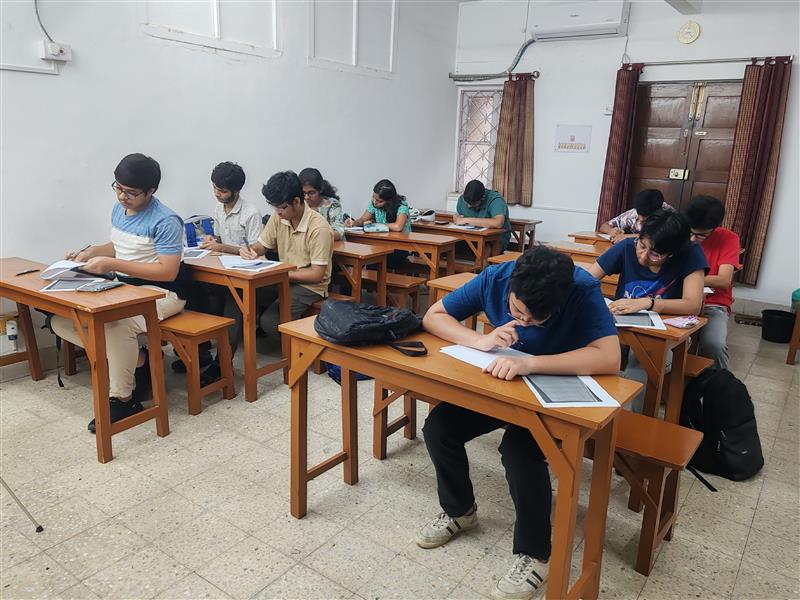
Best Physics Tuition in Kolkata: Why Quark Centre Is the Right Choice for JEE, NEET & Board Exam Success
14 May 2026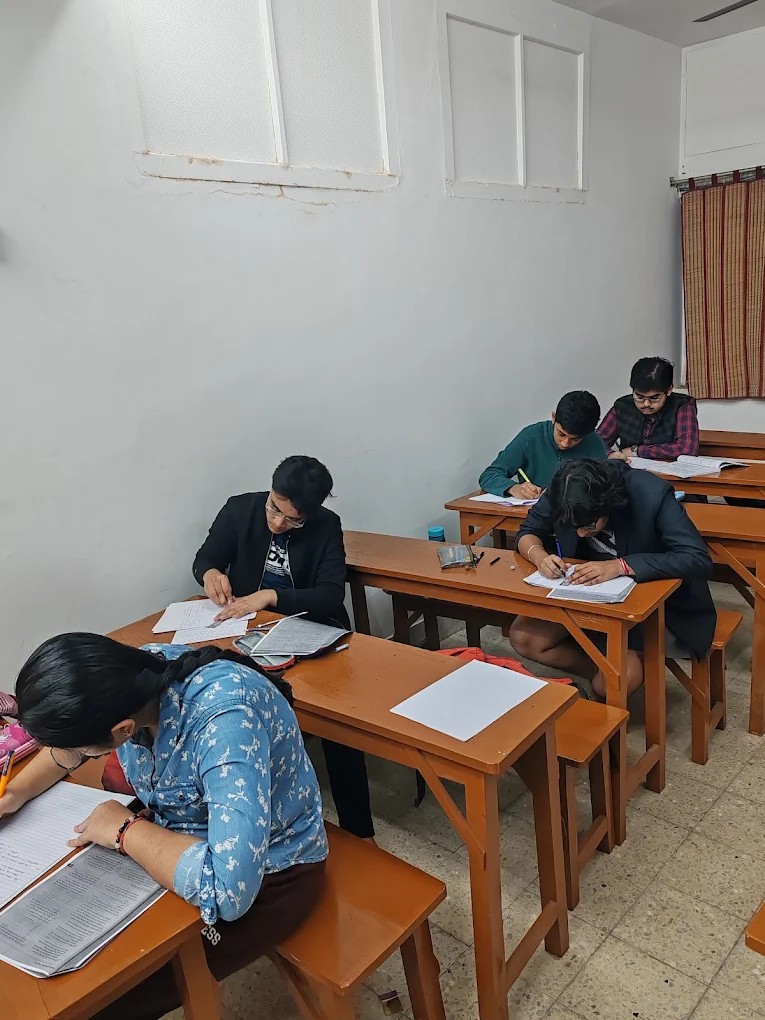
Online Classes for Physics JEE in Kolkata: How to Choose the Right Coaching in 2026
01 Jun 2026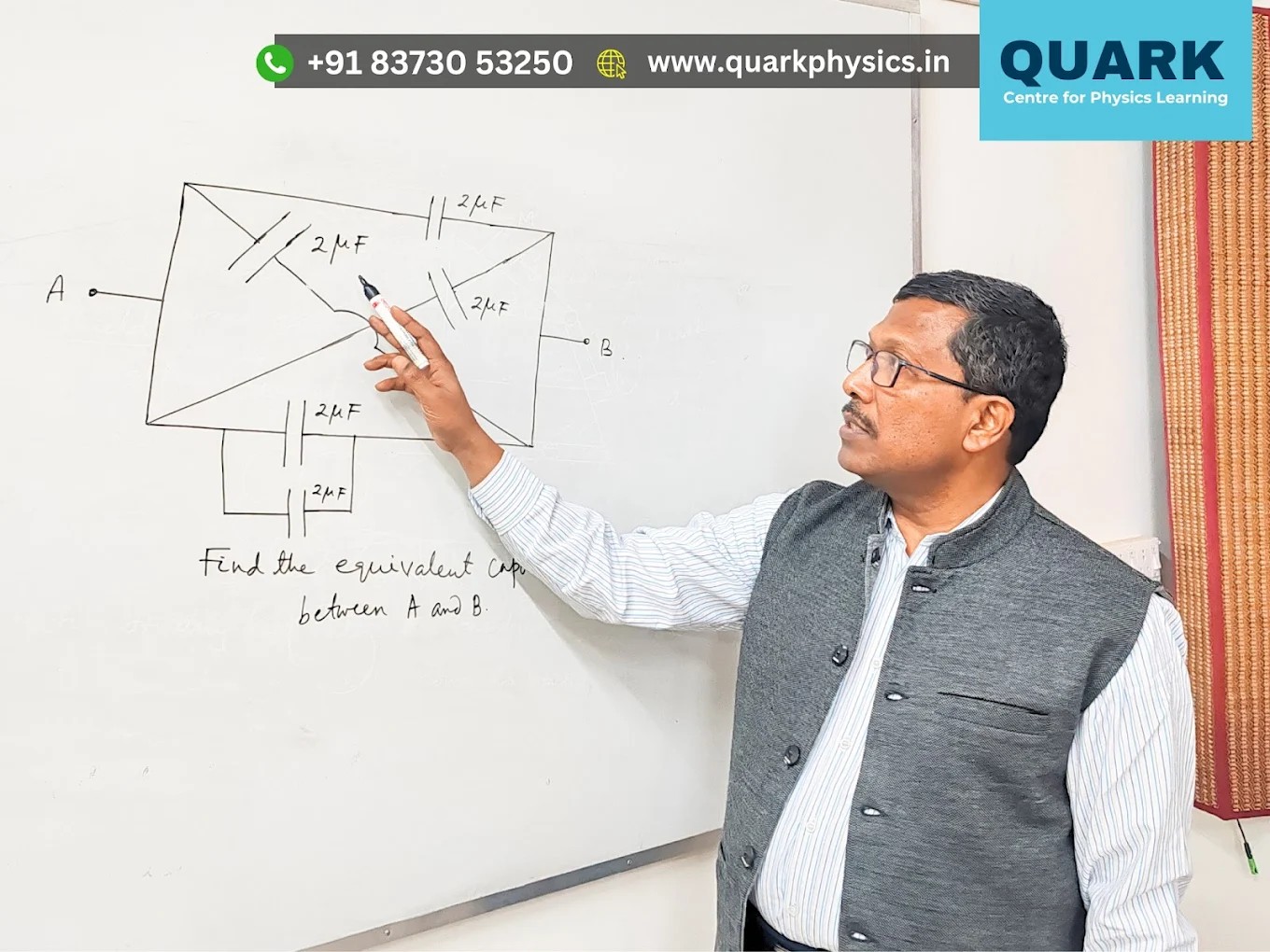
Physics Tuition in Kolkata: The Complete 2026 Guide to Right Coaching for Boards, JEE & NEET
21 Jul 2026
NEET Physics Roadmap for CBSE Class 11 Students in Kolkata
18 Aug 2026
WBJEE Physics Preparation : The Complete Guide for Students
10 Sep 2026
JEE vs NEET Physics: Should Your Child Prepare for Both at Once?
18 Sep 2026
Physics Home Tuition in Kolkata: Complete Guide for Class 9, 10, 11, 12, NEET and JEE Students 2026-27
08 Oct 2026
 quark740@gmail.com
 8373 053 250